
Seed To Life
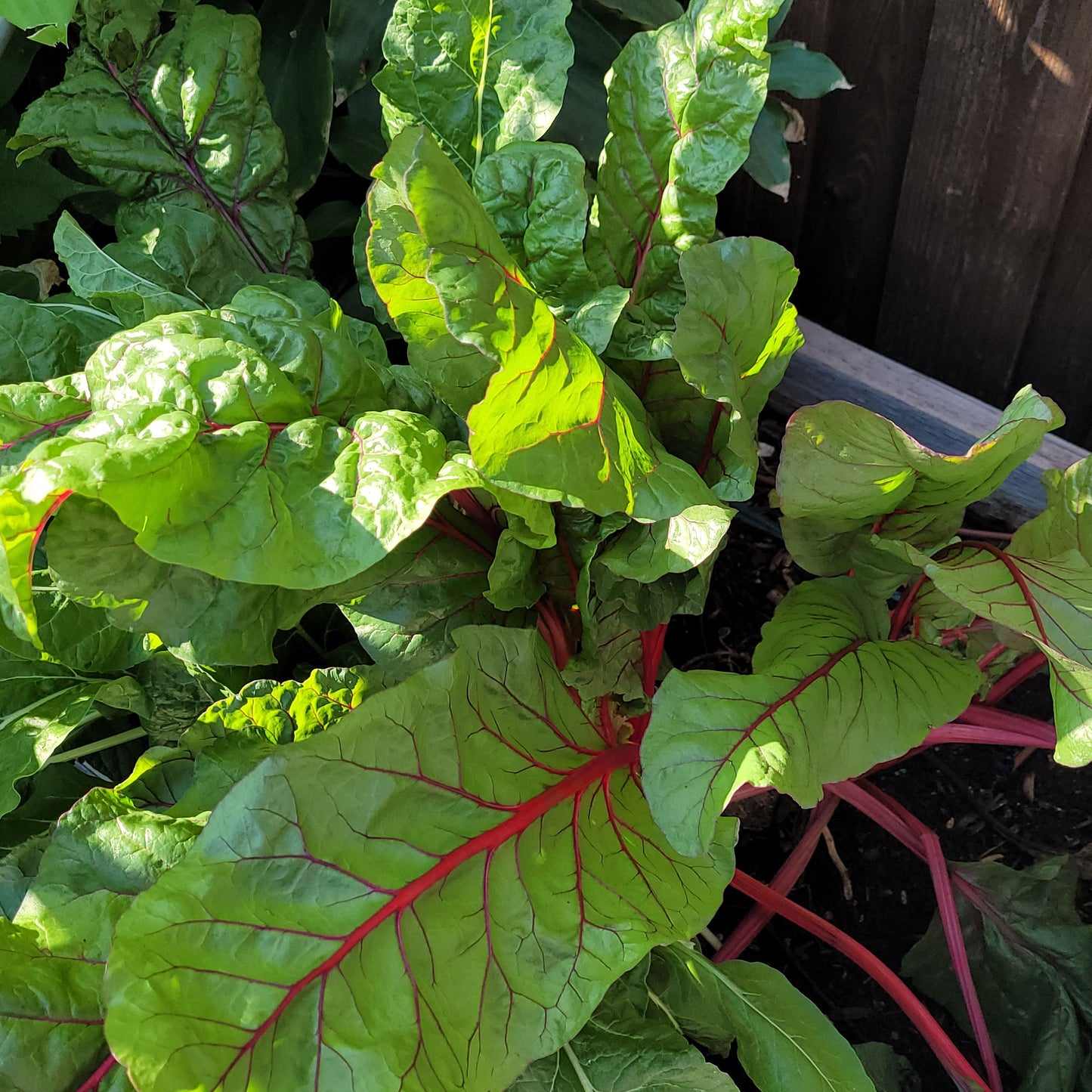
Organic Swiss Chard 'Ruby Red' – 100 Seeds
Organic Swiss Chard 'Ruby Red' – 100 Seeds
- 🌱 Grown & tested in our Texas garden
- 🚚 Ships from Texas in 1–2 days via USPS
- 💬 Growing help by text or email
Couldn't load pickup availability
Swiss Chard 'Ruby Red' growing facts
| Botanical name | Beta vulgaris subsp. cicla |
|---|---|
| Plant type | Biennial grown as cool-season annual |
| When to sow | 2–3 weeks before last spring frost, or 8–10 weeks before first fall frost |
| Sowing depth | 1/2 inch |
| Spacing | 6–12 inches apart, rows 18 inches |
| Germination | 5–14 days at 50–85°F soil |
| Sun | Full sun (6+ hours) to light shade |
| Days to harvest | About 60 days |
| Seeds per pack | 100 |
| Shipping | Ships from Texas within 1–2 business days |
Scientific Name: Beta vulgaris subsp. cicla
This is a great looking variety of Swiss Chard that produces green foliage with beautiful ruby-red stems. Not just a great looking salad component but it is also high in nutrition.
Swiss Chard is a cool season leafy green. It is great to grow it during either Fall or Spring. It is somewhat cold tolerant.
- Light Requirements - 6+ hours
- Days to Maturity- 60 days
- The optimal growing temperature is between 50°F and 75°F (10°C to 24°C).
Nutritional content per 100 grams (about 3.5 ounces) of raw Swiss chard:
Macronutrients:
- Calories: 19 kcal
- Protein: 1.8 g
-
Carbohydrates: 3.7 g
- Sugars: 1.1 g
- Fiber: 1.6 g
- Fat: 0.2 g
Vitamins:
- Vitamin K: 830% of the Daily Value (DV)
- Vitamin A: 122% of the DV (mostly as beta-carotene)
- Vitamin C: 44% of the DV
- Vitamin E: 10% of the DV
- Vitamin B6: 9% of the DV
- Folate (Vitamin B9): 12% of the DV
Minerals:
- Magnesium: 20% of the DV
- Manganese: 29% of the DV
- Iron: 22% of the DV
- Potassium: 11% of the DV
- Calcium: 5% of the DV
Swiss Chard 'Ruby Red' FAQ
When should I plant chard?
Sow in early spring 2–4 weeks before last frost. Warm regions (zones 8–10): fall and late winter are best; chard tolerates more heat than spinach.
Why do several seedlings come up together?
Each chard 'seed' is a cluster of seeds; thin to one plant per spot.
Can I grow it in a container?
Yes, use a pot at least 8–10 inches deep.
How do I harvest?
Cut outer stalks at the base and let the center keep growing.
Share
- 5 stars: 3 (100%)
- 4 stars: 0 (0%)
- 3 stars: 0 (0%)
- 2 stars: 0 (0%)
- 1 star: 0 (0%)
Seeds looked fresh and germinated well for me. Packaging was careful and clear.
Seeds looked fresh and germinated well for me. Packaging was careful and clear.
Seeds looked fresh and germinated well for me. Packaging was careful and clear.